
Your Cart
Your shopping cart is currently empty.
Kitchen
All things cooking, cleaning, chilling and more for the hard-working heart of your home.
KITCHEN | 23 JULY, 2026
8 MIN READ
How to clean an oven
Simple steps for non-toxic cleaning of regular and pyrolytic ovens
The short version: Check your manual to see if your oven is pyrolytic (self-cleaning) or standard. For standard ovens, mix baking soda and dish soap into a paste, leave on the interior for 30 minutes, then wipe clean; use white vinegar and water on the glass door. Pyrolytic ovens just need the self-cleaning cycle run every month or two - it turns grease into ash you wipe away, though racks still need a warm soapy water soak.
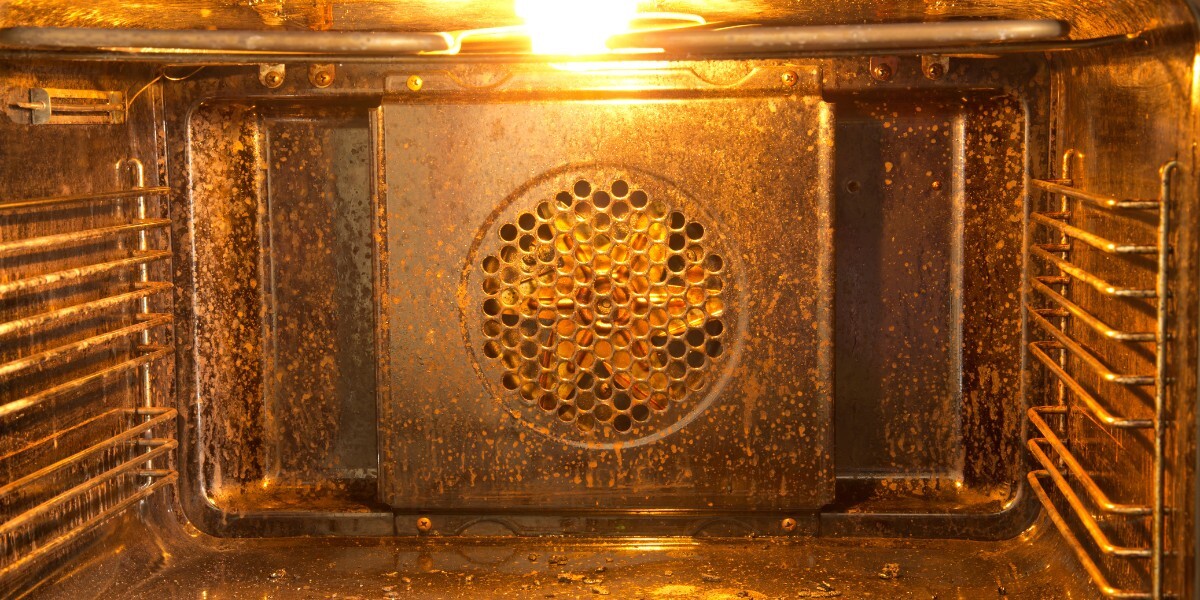
The price of delicious dinners can be a grease-spattered oven
Between baked dinners, chicken wings and the occasional overflowing lasagne, ovens cop a lot of punishment. Every spill and splatter gets more firmly cooked on each time you use it, until you're left with baked-on grease that won't budge with a quick wipe.
Learning how to clean an oven properly doesn't just make it look better - built-up grease and food residue can cause smoke, burnt smells and, if left unchecked, may even affect how your oven performs.
Fortunately, a deep clean is reasonably easy to do, whether your oven cleans itself or needs a bit of elbow grease.
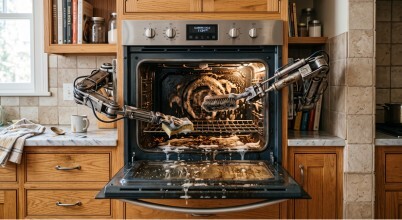
Not quite, but self-cleaning pyrolytic ovens do do the hard yards for you
Do you have a self-cleaning oven?
Before you start scrubbing, check whether your oven has a self-cleaning function. If you're not sure, check the manual or search your oven's make and model online. It will usually contain the word ‘pyrolytic’ in its product name.
Self-cleaning ovens use a pyrolytic self-cleaning cycle, which heats the interior to around 500°C and turns grease and food residue into a fine ash you can just wipe away - no scrubbing, chemicals or cleaning products needed.
If your oven doesn't have this feature, don't worry - a bit of baking soda and vinegar will work wonders.
Deep cleaning a standard oven
Most ovens in Australian homes are standard, non-pyrolytic models. If your manual doesn't specifically mention a pyrolytic or self-cleaning function, chances are this is what you've got. That just means you'll need to do a bit of the work yourself, rather than letting the oven do it for you.
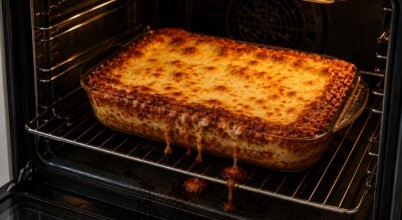
Dream dinners can make a nightmare mess, so wipe up oven spills while warm - not hot
Step 1: Prep the oven
Before you do a deep clean, the oven should be at room temperature. If you’re motivated to clean it after a particularly messy cook, let it cool before tackling it. Having said this, it’s best to wipe up any fresh spills while the oven is still slightly warm - but not hot - because it’s easier to clean before oils and sauces get fully dried on.
Remove the oven racks and trays. Pop them in the sink or a tub with warm water and a splash of dishwashing liquid or a dishwasher tablet, and let them soak for 20-30 minutes while you tackle the interior.
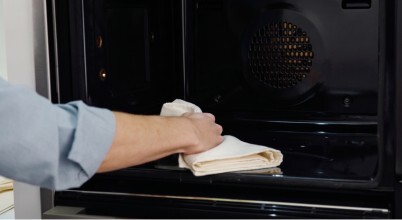
After soaking and mopping up the grime and cleaning paste, wipe away any remaining residue
Step 2: Clean the interior
Skip the harsh chemicals and mix up a natural cleaning solution instead: combine one cup of baking soda with a third of a cup of dish soap to form a thick baking soda paste. Using a soft sponge or brush, spread the paste over the interior of the oven, working it into any nooks and crannies where grease tends to hide. Avoid the heating elements, as these shouldn't get wet or covered in paste. Leave it for at least 30 minutes (longer if your oven is heavily soiled) to give the paste time to loosen the grime.
Once it has soaked into the grime, mop up the paste and the softened dirt with some paper towel, before wiping away any remaining residue with a damp cloth.
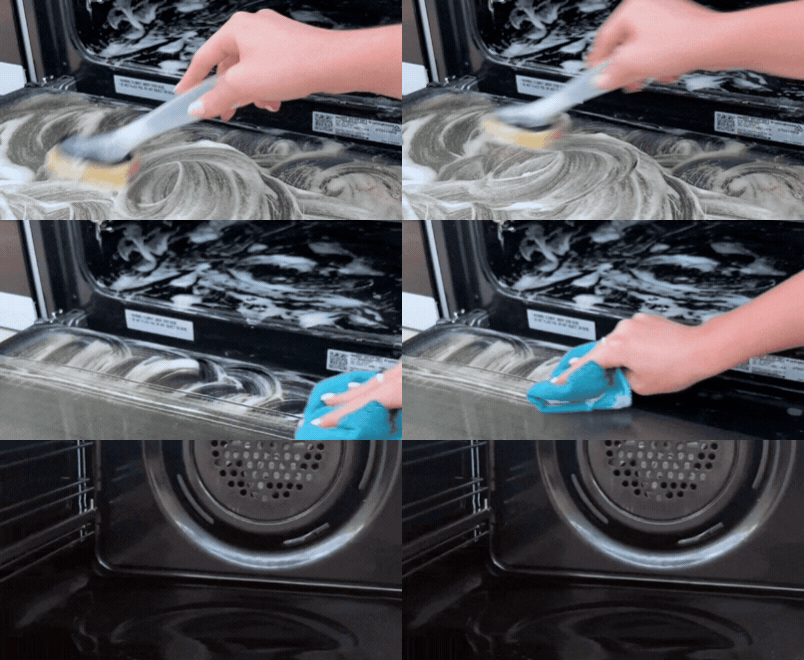
You could eat your dinner off of that
Step 3: Clean the glass door
For the glass oven door, mix equal parts white vinegar and water in a spray bottle and apply it in circular motions, then buff dry with a microfibre cloth for a streak-free finish.
If you've got stubborn, baked-on marks that won't lift with vinegar alone, dab on a little of the baking soda paste, leave it for 15 minutes, then wipe clean with a damp cloth. A squirt of lemon juice is another natural option that can cut through grease, or you can use a regular glass cleaner if you prefer.
Deep cleaning a pyrolytic oven
If your manual confirms you've got a pyrolytic oven, you're in luck - most of the hard work will be done for you. The self-cleaning feature doesn't kick in automatically after you finish cooking something though - you'll need to select it yourself every month or two, depending on how often - and what - you cook.
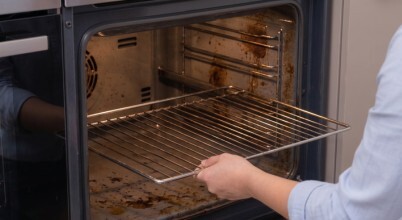
It is often advised to remove racks from pyrolytic ovens before running the self-cleaning cycle
Step 1: Prep the oven
Pyrolytic temperatures are too intense for oven racks and trays, so take these out before you start, along with any other loose accessories such as thermometers or trivets. Metal fittings that aren't rated for the cycle can warp or discolour under that much heat, so it's worth double-checking your manual if you're ever unsure what's safe to leave in.
Wipe up any large spills or heavy food deposits first too, since leaving a lot of residue in the oven during the cycle can cause smoke or an unpleasant smell. You don't need to scrub at this stage - just clear away the worst of it with a cloth or paper towel so the self-cleaning cycle isn't working overtime.
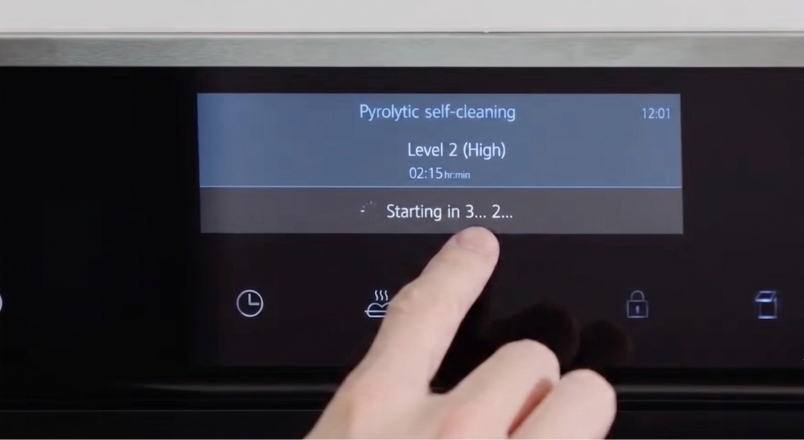
The pyrolytic self cleaning cycle can be up to 500°C, incinerating grime and turning it to ash
Step 2: Run the self-cleaning cycle
Select the pyrolytic function and let the cycle run its full course - this typically takes anywhere from 1.5 to 3 hours, depending on your model of oven.
For safety, the door locks automatically during the cycle and cannot be opened again until the oven has cooled down. Once it's finished and cooled, all that's left inside is a fine layer of ash, which you can easily wipe away with a damp cloth.
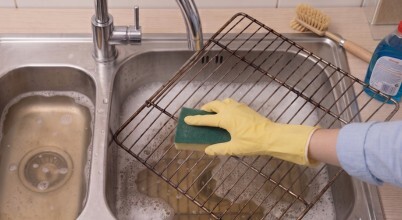
Soak oven racks and trays in warm, soapy water while the pyrolytic cycle runs, then scrub, rinse and dry
Step 3: Clean the racks and exterior
While the cycle runs, soak your racks and trays in warm, soapy water for 20-30 minutes, then scrub off any grease, rinse and dry them before putting them back in when the pyrolytic cycle is complete.
For the exterior, clean the glass oven door the same way as above: a vinegar and water solution applied in circular motions, buffed dry with a microfibre cloth.

Need a new oven? Check out our Top Seller built-in ovens and freestanding stoves
A few extra tips
A handful of small habits can make cleaning easier and help protect your oven, whether you're mid-clean or thinking ahead to next time. Here's what's worth keeping in mind.
Wear rubber gloves. Baking soda paste and vinegar are gentle on your oven, but they're still worth keeping off your skin for extended periods.
Steam cleaning can help loosen light grime. Pop an oven-safe bowl of hot water in a standard oven and heat it on low for 20 minutes - the steam helps soften grease before you wipe it out, meaning less scrubbing later.
An old toothbrush is great for nooks and crannies around the door seal or racks that a sponge can't reach.
Washing powder can substitute for dish soap if you're soaking particularly greasy racks.
Don't use abrasive scourers on a pyrolytic oven's interior, as the enamel coating that helps it self-clean can scratch.
A regular deep clean is much easier when you're not tackling months of built-up grease. Wiping up spills while the oven is still warm, giving the door glass a quick spray with vinegar every so often, and running your self-cleaning cycle every month or two (if you have a pyrolytic model) will help you stay on top of things.
Get a new oven sooner, with FREE Next Day Delivery*
We deliver ovens, fridges, dishwashers and the rest of our products to 95% of Australia’s population with Appliances Online's legendary FREE delivery - and we can usually get it to you by the next day (Mon-Fri). Plus, we offer paid Same Day Delivery in NSW, QLD, and VIC metro areas if you order before 12pm Mon-Fri.
Most electric ovens need a licensed electrician to install them, and to make life easier, you can usually choose to add this service to your order when buying your oven. Check out the full range of ovens here, or if you need some tips for choosing the best type or size for you, read our Oven Buying Guide, call our friendly team 24/7 on 1300 000 500, or message us via the chat icon at the bottom of your screen.

Oli is Appliances Online's editor and blogger, with almost two decades of lifestyle-related writing and editing to his name. With a mission to help you buy better and live smarter, his brand loyalty will forever belong to the appliance manufacturer that develops a self-emptying dishwasher.
Latest Articles
HOME LIVING+
8 OCTOBER 2026
10 of our best selling indoor bar fridges in Australia 2026
Find the perfect compact drinks fridge for your home
BBQ & OUTDOOR
1 OCTOBER 2026
5 of our top best selling outdoor bar fridges in Australia 2026
Alfresco fridges to keep your drinks icy cold this summer.
BBQ & OUTDOOR
25 SEPTEMBER 2026
Indoor vs outdoor bar fridges
Important differences to know about
ECO & SAVE
21 SEPTEMBER 2026
How to choose more eco-friendly appliances for your home
There’s more to it than just energy efficiency
More Like This
HOME LIVING+
8 OCTOBER 2026
10 of our best selling indoor bar fridges in Australia 2026
Find the perfect compact drinks fridge for your home
BBQ & OUTDOOR
1 OCTOBER 2026
5 of our top best selling outdoor bar fridges in Australia 2026
Alfresco fridges to keep your drinks icy cold this summer.
BBQ & OUTDOOR
25 SEPTEMBER 2026
Indoor vs outdoor bar fridges
Important differences to know about