
Your Cart
Your shopping cart is currently empty.
Eco & Save
Reduce your carbon footprint and your utility bills by getting more energy efficient and water-wise.
ECO & SAVE | 14 NOVEMBER, 2025
4 MIN READ
How to make homemade vegetable stock
Delicious, nutritious and economical
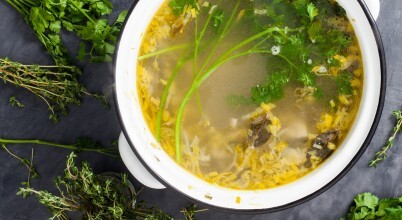
Make veggies go further and reduce food waste
A good vegetable stock is a versatile kitchen staple that can add a rich, aromatic flavour to all sorts of dishes. Use it as a base for soups, risottos, sauces and stews, or even to cook grains or pulses like lentils. Making your own stock from vegetable scraps is not only tasty - it’s also a great way to reduce food waste.
Leftover peels, stems, and trimmings - that might otherwise end up creating greenhouse gases when buried in landfill - can be turned into a nutrient-packed broth. The cooking process also partially breaks down the scraps, so any remaining solids you remove after simmering are less likely to contribute to harmful emissions.

Read: Reduce food waste and save money - Smart cooking and meal prep
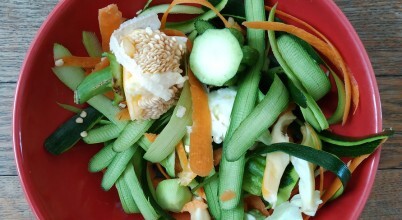
Leftover vegetable scraps become ingredients
What you’ll need
Whichever vegetable scraps you use to make a homemade vegetable stock, be sure to wash or scrub the veggies before peeling them so no soil or residue sneaks into the pot.
You can use offcuts, stalks and peelings from a wide range of veggies, like carrots, parsnips, leeks, zucchini, butternut squash, turnips, mushroom stems, fennel tops and corn cobs that have previously had their kernels removed. Avoid starchy vegetables like potatoes, and too many cruciferous vegetables, which can make the stock cloudy or bitter.
Approximately 500-700g of vegetable scraps.
Aromatic additions like onion skins, garlic cloves, fresh thyme, fresh parsley, bay leaves, and sprigs of other fresh herbs.
Approximately 3-4 litres of water per batch. Around 150–200g of vegetable scraps per litre of water will generally give you a balanced, flavourful stock.
Optional: a drizzle of olive oil to sauté scraps lightly for extra depth.
You’ll also need a large pot or slow cooker, and a fine mesh strainer to remove solids after cooking.
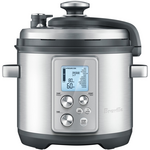
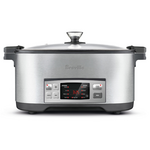
Make stock the easy way with a slow cooker
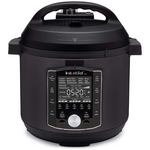
Instant Pot 8Ltr Pro Multi-Cooker-Black 113-0076-01-AU
Yet to be reviewed
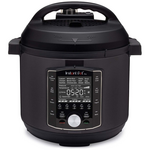
Instant Pot Pro Multi-Cooker 5.7Ltr-Black 112-0127-01-AU
Yet to be reviewed
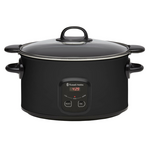
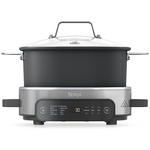
Morphy Richards 6.5L Slow Cooker Vivid White MRSC65WT
Yet to be reviewed
Morphy Richards 6.5L Slow Cooker Matte Black MRSC65BK
Yet to be reviewed
Morphy Richards 6.5L Digital Slow Cooker Matte Black MRDSC6BK
Yet to be reviewed
How to make vegetable stock
Prep the scraps: Gather your vegetable scraps in a container. Keep a freezer bag handy to store scraps over the week until you have enough for a batch. Wash them briefly if needed.
Optional sauté: For extra umami and aromatic depth, heat a splash of olive oil in a stock pot over high heat, then lightly sauté onion skins, garlic cloves, and veggie scraps for 2-3 minutes.
Add water and herbs: Pour in enough water to cover the vegetables. Add bay leaves, fresh herbs and a few black peppercorns. Bring to a boil.
Simmer: Reduce to a gentle simmer and cook for 45-60 minutes on the stove. Alternatively, use a slow cooker on low for 4-6 hours or pressure cook for 20-30 minutes for a quicker option. Do whatever works for you, but you’ll probably find that the longer it simmers, the richer the flavour.
Strain: Remove solids using a colander or fine mesh strainer. Press gently to extract extra liquid, and then discard - ideally composting them.
Store: Cool the stock, then refrigerate for up to 4 days or freeze in portions.
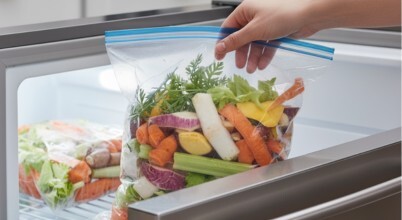
Add vegetable peelings and offcuts to a freezer bag until you're ready to make a stock
Homemade veggie stock is naturally gluten-free and low in saturated fat, and can contain nutrients like potassium, vitamin C and calcium.
With just a little prep time, a few fresh herbs, and a large pot, you can transform everyday scraps into a tasty, healthy base for a wide range of meals.
If you want to set and forget your next batch of vegetable stock, check out Appliances Online's large selection of a slow cookers and multicookers, delivered to 95% of Australians with Free Next Day Delivery for in-stock (pun intended!) items.

Oli is Appliances Online's editor and blogger, with almost two decades of lifestyle-related writing and editing to his name. With a mission to help you buy better and live smarter, his brand loyalty will forever belong to the appliance manufacturer that develops a self-emptying dishwasher.
Latest Articles
KITCHEN
18 MARCH 2026
How to get the most from your oven
Handy settings and other simple tips
KITCHEN
10 MARCH 2026
4 reasons you should never plug your fridge into an extension cord or power board
Fridges run 24/7, so give them their own wall socket!

BLOG HOME
9 MARCH 2026
True South: A race to remember
Legacy and spirit in the Sydney to Hobart yacht race
KITCHEN
5 MARCH 2026
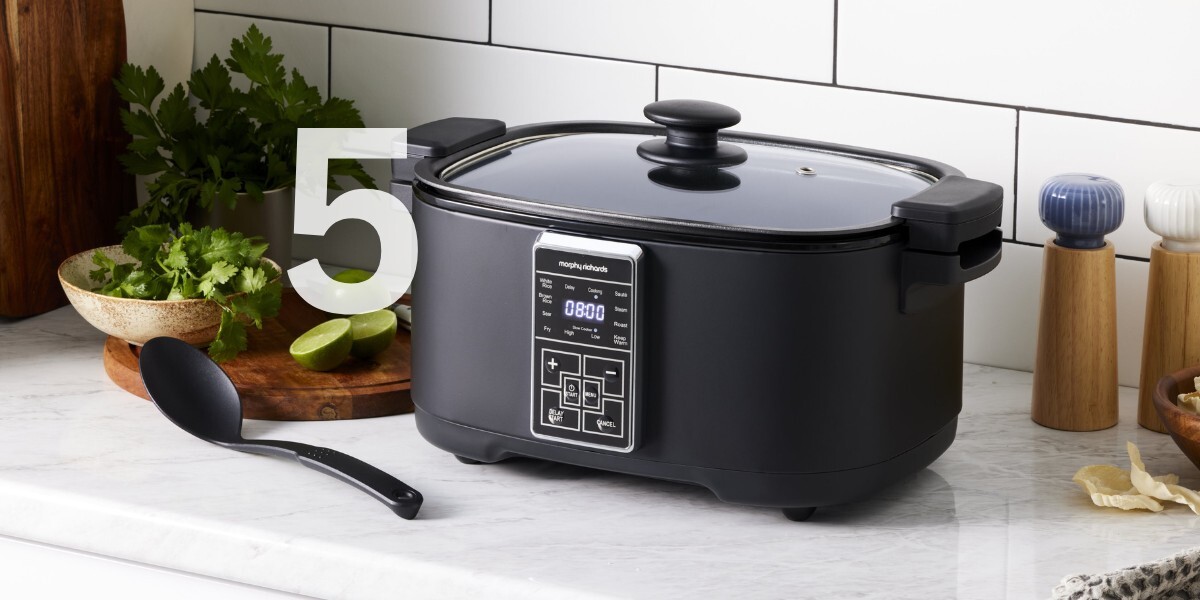
5 of our top best selling slow cookers in Australia 2025-26
Make Autumn easy with one-pot, slow-cooked meals.
More Like This
KITCHEN
18 MARCH 2026
How to get the most from your oven
Handy settings and other simple tips
KITCHEN
10 MARCH 2026
4 reasons you should never plug your fridge into an extension cord or power board
Fridges run 24/7, so give them their own wall socket!
BLOG HOME
9 MARCH 2026
True South: A race to remember
Legacy and spirit in the Sydney to Hobart yacht race