key Specifications
Brand
DCW Editions
Model Number
214BL
Height (mm)
1170 mm
Width (mm)
260 mm
Depth (mm)
280 mm
Weight (kg)
3.5 kg
Finish Colour
Black
Material
Steel




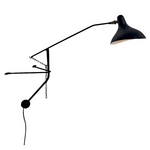
Whether you need a replacement for a broken appliance, an upgrade with advanced features, or a larger model for your family, it's hard to know where to begin among the endless array of choices. There's no need to panic since Appliances Online can assist you in finding the ideal appliances and home essentials that meet your budget, taste, and needs. We aim to redefine the daunting ordeal of appliance shopping into a seamless and stress-free experience. Being the biggest online appliance retailer in Australia, you'll find yourself with the luxury of choice, given that we have over 8,000 distinctive products from top global brands. We're not just about providing appliances and closing up shop; we're passionate about changing the way you approach appliance shopping, ensuring a memorable experience with our outstanding service. With Appliances Online, you can finally say goodbye to that seemingly endless search for products like DCW Editions Gras 214 Wall Lamp - Black 214BL. Now that you've found us, we'll guide you through every step in your appliance buying journey, ensuring you get tailored solutions – after all, that's what being a trusted home appliance partner is about.
Seeing that home appliances and other home essentials play a vital role in your daily life, we aim to simplify and make your purchase convenient. We know that you're looking for certain items, and you might need them right away; because of that, we've fine-tuned our services to make shopping with us straightforward. We have Free Next Day Delivery, and it extends to 95% of all the people in Australia, making sure that your order, if in stock, is delivered the following day, Monday through Friday, in most cases. This means that even products like CTO Lighting Anvers Medium Ceiling or Wall Light - Bronze ANVCWMBZHA and DCW Editions In The Tube 360° 1000 - Gold Mesh ITT3601000GOM could be with you sooner. Plus, in the many areas we go to, we take care of Free Connection for major appliances and even remove your old appliances for recycling for free; just don't forget to select this option at checkout! Our goal is to make sure it is as easy as possible for you to upgrade or purchase any brand new appliances, like Bora X BO Deep Universal Tray - XBOUBT or Husky 198L Hybrid Chest Freezer HUS198CHE1, and get them ASAP.
Owing to our distinguished service, the process of ordering from Appliances Online is made easy and without stress. Our goal is to provide all the assistance, advice, and information you need to find products that fit your budget and requirements. Place your postcode or suburb in the ‘set location' section on our webpage to see if you reside within our delivery zone. Additionally, for any questions, our customer service team in Sydney is on hand 24/7, every day of the year, to address your questions promptly. You can reach out to us at 1300 000 500 to speak to a real person, so if you have questions about Lighting or other collections, someone is ready to guide you in real time. Even if you're interested in products from our Consumer Electronics category or items from our Taps and Water page, we're happy to help you. Finally, you can benefit from our Price Match Guarantee: if you come across a lower price for an identical appliance from a retailer on our list of Approved Retailers, just contact our customer service quickly so we can match it. Purchase your ideal appliance today and get it sooner with Free Next Day Delivery.