
Your Cart
Your shopping cart is currently empty.
Eco & Save
Reduce your carbon footprint and your utility bills by getting more energy efficient and water-wise.
ECO & SAVE | 21 SEPTEMBER, 2026
9 MIN READ
How to choose more eco-friendly appliances for your home
There’s more to it than just energy efficiency
The short version: Choosing more energy efficient appliances is one of the easiest ways to lower your power bills and shrink your household's environmental footprint. The best way to spot genuine sustainability, rather than clever marketing, is to look at how long a brand supplies spare parts, how much recycled material actually goes into its products, and whether its claims are independently verified.
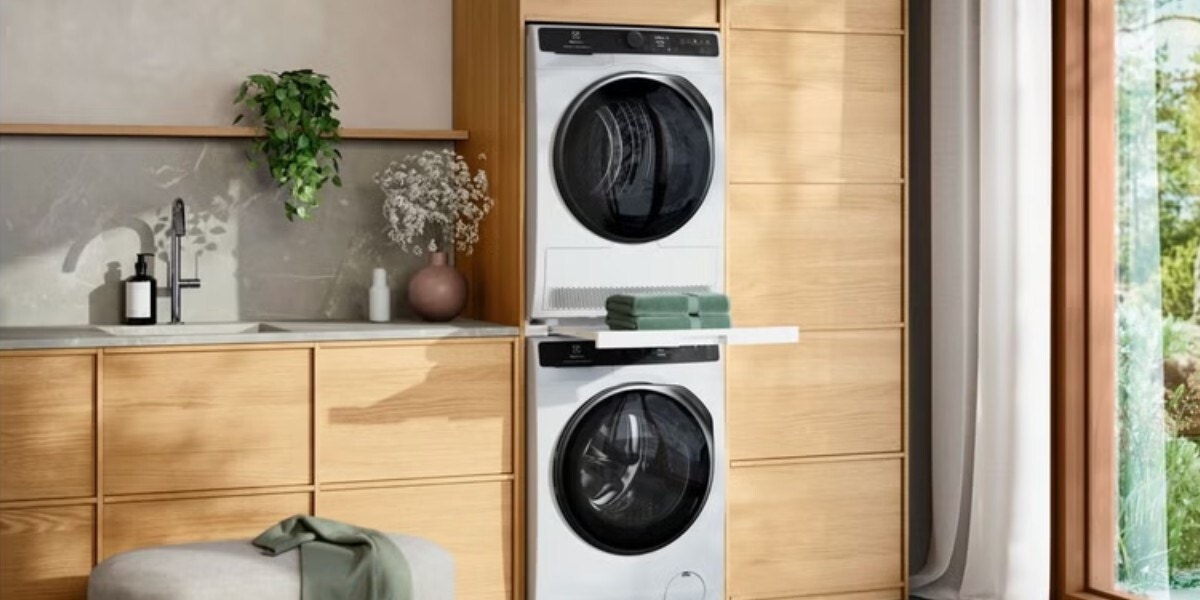
With power and water costs only heading one way in Australia, it's worth thinking about sustainability when you replace a household appliance. Fridges, washing machines and dryers are some of the biggest energy users, so more efficient models can make a real difference to running costs over their lifetime.
While it’s simple to look for energy efficiency in your next replacement (Appliances Online lets you filter for higher Energy Star ratings), it’s not always so easy to know whether it’s been produced in a more environmentally friendly way. The following brands often publish figures around their efforts to improve sustainability.
Appliances Online product expert Colin Jones shares his insights into what to look for in a new appliance in terms of sustainability;
"There are a couple of key things that really affect how sustainable an appliance is. The first is smarter technology that only uses the power it needs at any given moment, rather than running at one fixed level. Inverter compressors are a great example of this, you'll find them in fridges and air conditioners now, adjusting their speed to match demand instead of just switching fully on and off the way older compressors did, which uses noticeably less energy. You see the same thinking behind more advanced designs with fewer moving parts and fewer energy-hungry components - heat pump dryers, for example, can use up to 60% less energy than traditional vented dryers.
The second is simply how well an appliance is built. Higher quality materials mean it's more likely to still be running well in ten or fifteen years, and if a brand uses recycled materials in its construction, that's a bonus. Some brands have policies to keep producing spare parts long after a model has stopped being made, so that's worth looking out for if you're open to repairing appliances and extending their life."
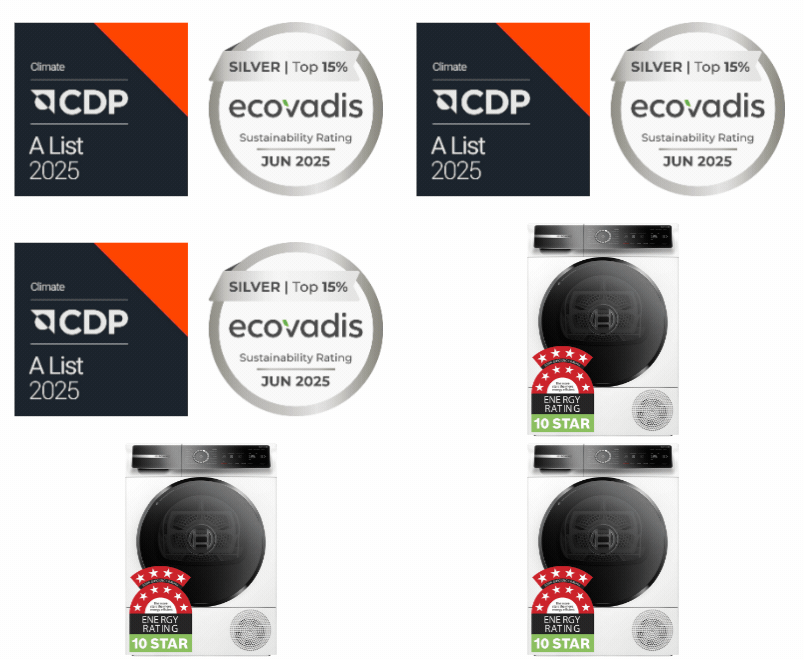
Bosch produces a highly efficient 10 Energy Star clothes dryer
Bosch, Siemens and Neff - carbon neutral innovation
Bosch, Siemens and Neff all sit under the same parent company, BSH Home Appliances, which has run as a carbon-neutral business worldwide since 2020 through a mix of renewable energy, efficiency upgrades and carbon offsets.
BSH has also set a 2030 target to cut the indirect emissions across its supply chain by 15% compared with 2018 levels. Its Green Collection fridges have had their material carbon footprint reduced by around 33% using CO2-reduced steel and bio-based plastics.
Since 2024, the same approach has extended to a dishwasher range built with CO2-reduced stainless steel, independently verified by TÜV Rheinland as having up to 47% lower carbon footprint than the standard material.
- Bosch heat pump dryers use sensor-based drying and a self-cleaning condenser to avoid over-drying and wasted energy. Shop Bosch heat pump dryers
- Siemens and Neff pyrolytic ovens share the same BSH sustainability commitments and use efficient fan-forced heating to cut cooking energy and time. Shop Neff pyrolytic ovens
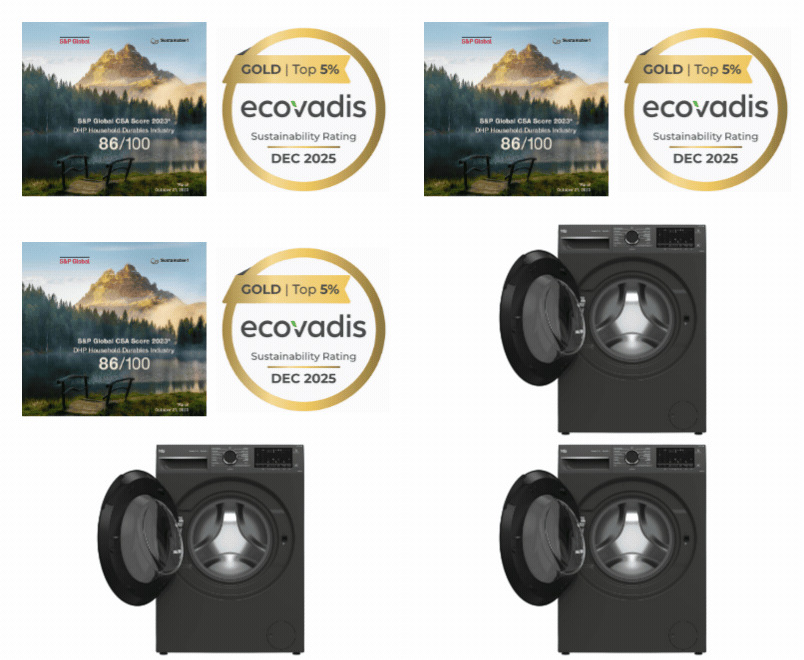
Beko AutoDose washing machines reduce detergent waste
Beko - turning waste into everyday appliances
Beko was named one of TIME Magazine's World's Most Sustainable Companies for 2025, climbing to #17 globally (up from #44 the year before) and taking the #1 spot in its industry category, an independent ranking that assesses more than 5,000 global companies on emissions, transparency and circular economy practices. Beko backs this up with genuine durability testing too: appliances are stress-tested at Arçelik's own labs and independently verified by TÜV, including oven doors opened and closed 100,000 times and dishwasher racks run through 100,000 loaded cycles, so products are truly built to last.
- Beko AutoDose washing machines automatically measure and dispense the exact amount of liquid detergent needed for each wash, cutting down on excess product going down the drain. Shop Beko AutoDose washing machines
- Beko AutoDose dishwashers use the same automatic dosing technology to reduce water and detergent wastage on every cycle. Shop Beko AutoDose dishwashers
A 5.5. Energy Star-rated Adora washing machine from V-Zug
V-Zug - Swiss precision, built for circularity
V-Zug has run carbon-neutral production sites since 2020, offsetting unavoidable emissions through its own V-Forest reforestation program rather than relying on outside credits. The Swiss brand designs its appliances around 10 circularity principles, aiming to make parts easier to repair, upgrade and eventually recycle rather than replace outright.
V-Zug also reports a very high first-time fix rate of over 90% for its service technicians, meaning most repairs are completed correctly on the first visit, keeping appliances in use for longer.
- V-Zug Adora washing machines pair precise water and energy dosing with a long list of fabric-specific cycles, including an energy-saving program. Shop V-Zug Adora washing machines
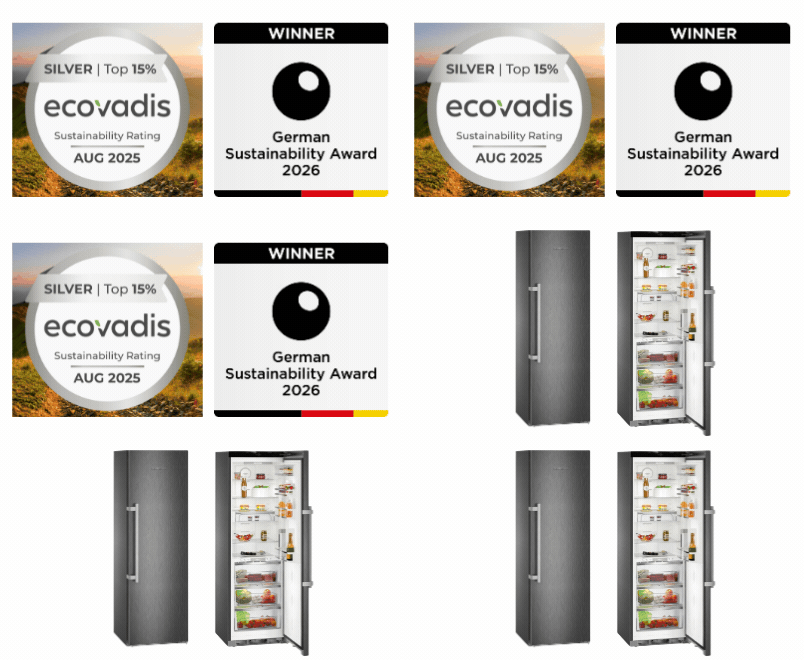
Several Liebherr fridges have six Energy Stars, well above most fridges on the market
Liebherr - refrigeration designed for a circular future
Liebherr was named a double winner of the German Sustainability Award for 2026, recognised both as a company and for an innovative full-vacuum freezer built around long-lasting insulation, ease of repair and materials that can be separated for recycling at the end of its life - all core principles of circular design.
Liebherr carries a similar focus on efficiency through many of its fridges too, with several current models rating an impressive six Energy Stars, well above most fridges on the market. Exactly how each model gets there varies a little: some rely on BluPerformance, which packs the compressor and refrigeration components into the base of the fridge to free up storage space, while others use a combination of separate dual-circuit cooling and fan-driven airflow.
- Liebherr 6 Energy Star fridges pair top-tier energy efficiency with BioFresh compartments that keep produce fresh for up to three times longer than some standard fridges. Shop Liebherr fridges with 6 Energy Stars
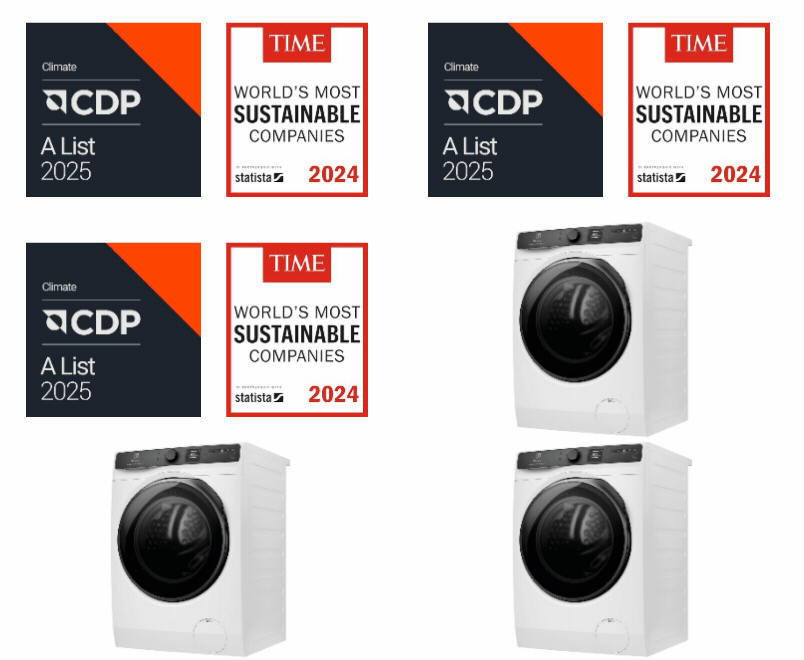
Electrolux IntelliDose washing machines can use up to 60% less detergent than regular dosing
AEG and Electrolux - cutting emissions with smart technology
AEG and Electrolux are part of the same Swedish group, which has cut its production emissions by 36% and the emissions created while its products are in use by 31%, since 2021. The group has also set a target to lift the recycled steel and plastic used across its manufacturing to 35% by 2030, and has signed an early agreement to bring green, hydrogen-produced steel into its supply chain from 2026.
- Electrolux IntelliDose washing machines use sensors to measure the precise amount of detergent needed for each load, cutting the amount used by up to 60% without compromising the depth or quality of clean. Shop Electrolux IntelliDose washing machines
- AEG heat pump dryers dry clothes at the same low temperatures as most heat pump dryers, but also feature AbsoluteCare to extend garment life and reduce textile waste, and 3DScan technology that targets deep moisture to prevent energy-wasting over-drying. Shop AEG heat pump dryers
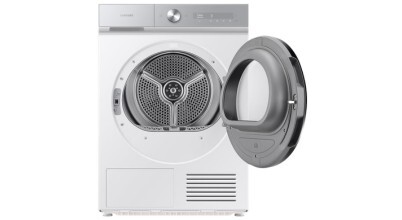
Samsung Bespoke AI heat pump dryers read fabric temperature and moisture to avoid wasting energy
Samsung - energy efficiency at scale
Samsung reports that seven of its major product categories, including fridges, washing machines and air conditioners, now use 31.5% less energy on average than they did back in 2019. That's already ahead of the company's own 2030 target, and it reflects steady, measurable improvement rather than a single flagship product. Samsung's laundry range shows this in practice, particularly its AI-assisted drying technology.
- Samsung Bespoke AI laundry appliances use accurate measurements to reduce water, power and detergent waste. AI Wash uses sensors to detect load weight, fabric type and soil levels. It adjusts water, detergent, and cycle duration, creating a more precise wash that reduces excess while maintaining fabric care. The Bespoke AI heat pump dryers use multiple sensors to read fabric temperature and moisture in real time, automatically adjusting the cycle to avoid overdrying and wasted energy. Shop Samsung Bespoke AI laundry washers and dryers
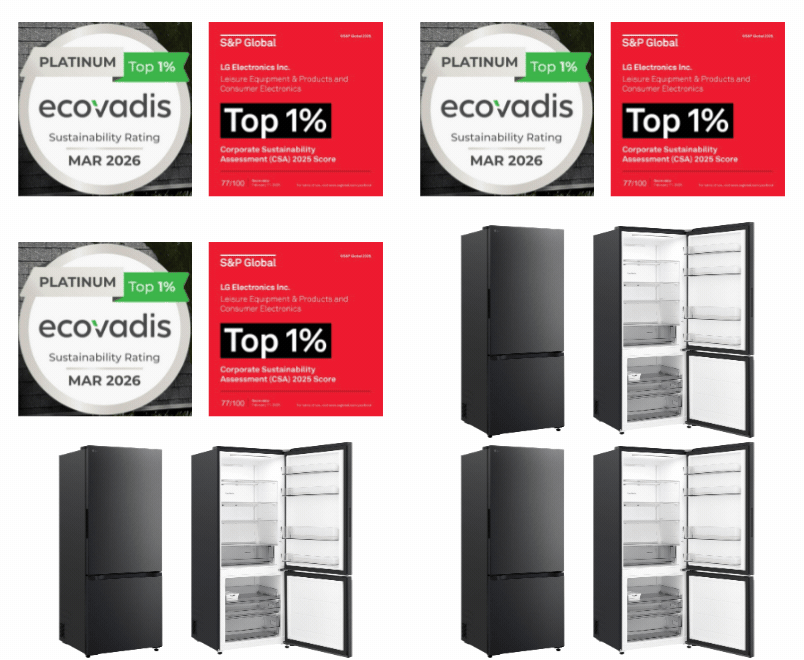
LG has 10-year warranties on the core moving parts of many of its appliances
LG - recognised for sustainability leadership
LG Electronics has earned a Platinum rating from EcoVadis, the world’s leading evaluator of corporate sustainability and social responsibility, placing it in the top 1% of companies assessed globally. It has also ranked in the top 1% of S&P Global's Corporate Sustainability Assessment for three years running.
LG backs this up at the product level too, with a theme that runs through several of its major appliance ranges: put a long warranty on the core moving part, on the logic that an appliance built to last is inherently more sustainable than one built to be replaced.
- LG washing machines use an Inverter Direct Drive motor that connects straight to the drum with no belt or pulley, backed by a 10-year parts warranty. Germany's VDE independently certified the motor for a 20-year lifespan, one of the longest ratings the body has given this type of component. Shop LG washing machines
- LG heat pump dryers have energy ratings of up to 9 stars, among the most efficient dryers sold in Australia, and have the same 10-year warranty on the inverter motor. Shop LG heat pump dryers.
- LG fridges with Smart Inverter compressor also carry a 10-year parts warranty on the compressor, and use less energy than older fixed-speed models. Shop LG fridges
Making the right sustainable choice for your home
Choosing your next appliance is a chance to make a genuine difference to both your power bills and your household's environmental footprint. Energy and water star ratings should always be your starting point, but if you can also find information about a brand's wider sustainability credentials, treat that as a welcome bonus.
Look for what a brand can actually prove: how long it commits to supplying spare parts, how much recycled material goes into its products, and whether independent bodies back up its claims. More sustainable appliances can cost a little more upfront, but over their lifetimes may end up saving you energy and money while leaving a smaller carbon footprint.

Oli is Appliances Online's editor and blogger, with almost two decades of lifestyle-related writing and editing to his name. With a mission to help you buy better and live smarter, his brand loyalty will forever belong to the appliance manufacturer that develops a self-emptying dishwasher.
Latest Articles
HOME LIVING+
8 OCTOBER 2026
10 of our best selling indoor bar fridges in Australia 2026
Find the perfect compact drinks fridge for your home
BBQ & OUTDOOR
1 OCTOBER 2026
5 of our top best selling outdoor bar fridges in Australia 2026
Alfresco fridges to keep your drinks icy cold this summer.
BBQ & OUTDOOR
25 SEPTEMBER 2026
Indoor vs outdoor bar fridges
Important differences to know about
HEATING, COOLING & AIR TREATMENT
16 SEPTEMBER 2026
5 of our most popular ceiling fans in Australia 2026
Keeping cool for less is a breeze.
More Like This
HOME LIVING+
8 OCTOBER 2026
10 of our best selling indoor bar fridges in Australia 2026
Find the perfect compact drinks fridge for your home
BBQ & OUTDOOR
1 OCTOBER 2026
5 of our top best selling outdoor bar fridges in Australia 2026
Alfresco fridges to keep your drinks icy cold this summer.
BBQ & OUTDOOR
25 SEPTEMBER 2026
Indoor vs outdoor bar fridges
Important differences to know about