Your Cart
Your shopping cart is currently empty.
Kitchen
All things cooking, cleaning, chilling and more for the hard-working heart of your home.
KITCHEN | 23 OCTOBER, 2026
10 MIN READ
What type of wine fridge do you need?
Single or dual zone? Bottle capacity? Built-in or freestanding?
The short version:
- Single zone wine fridges hold one temperature and suit long-term storage. Dual and multi-zone models let you keep whites, sparkling and reds at different serving temperatures.
- Freestanding wine fridges typically need space around them for airflow, while built-in and integrated models vent from the front. Advertised bottle capacity is based on slim Bordeaux bottles, so wider bottles like Pinot Noir and sparkling will reduce it.
- Wine fridges are designed to hold a steady, wine-friendly temperature, whereas bar fridges run colder and aren’t built for wine storage.

As a country that produces some top quality drops, it’s no surprise that Australia has developed a sophisticated wine culture in a relatively short time. Since wineries were established in the mid 1800’s, we’ve grown into a nation of wine drinkers who care about quality, varietals and flavour profiles, as well as what temperature our favourite tipples are served at.
If you’re ready to progress from ‘room temperature for reds and fridge-cold for whites’ then a wine fridge can be an excellent investment. Finding the right model, though, will depend on your drinking preferences, home layout and budget. Whether you need a dual zone wine fridge for entertaining or a single zone fridge for long-term storage, a good wine fridge can keep your favourite drops at their optimal temperatures, even during the Australian summer.
Do I need a single zone, dual zone or multi-zone wine fridge?
This is often the first big decision when shopping for wine fridges, and it comes down to whether you're storing wine to age it or chilling it to drink now. A wine fridge can be a significant investment, so make sure the internal layout suits your actual drinking habits. If you serve a delicate white at the same temperature you store a heavy red, you'll lose the intended flavour profile.
Are you storing wine to age it or chilling it to drink now?"
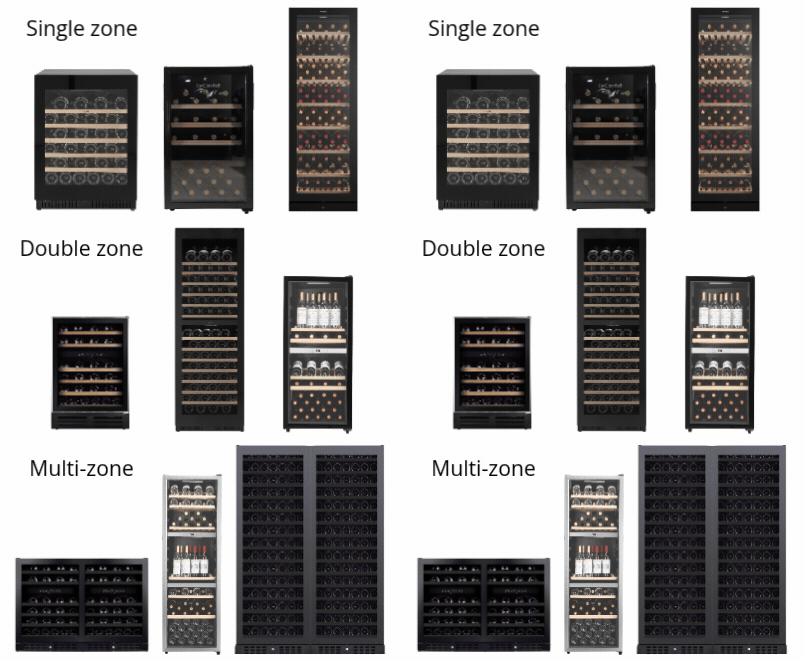
Selections of single, double and multi-zone wine fridges
Single zone wine fridges hold one consistent temperature, usually around 12 to 14°C. That makes them a good wine storage solution if you're cellaring for the long term, or if you mostly drink one style and are happy to set the temperature to suit it.
Dual zone wine fridges have two independently controlled compartments, which makes them the go-to for serving. You can keep whites and sparkling at 5 to 12°C in one section and red wines at a warmer serving temperature of 13 to 18°C in the other.
Multi-zone wine fridges take this a step further with three or more independently controlled zones. They suit larger wine collections with a broader mix of styles, such as sparkling, whites, light reds and full-bodied reds, where each can sit at its own ideal temperature.
Appliances Online product expert (and aspiring wine aficionado) Colin Jones says that if you’re thinking of getting a wine fridge for everyday use, there’s a pretty clear-cut choice for the average Aussie buyer: “For many Australians, who use wine fridges more for entertaining than for long-term storage, a dual zone model is a great option. You’ve got plenty of space for reds and whites, and when unexpected guests turn up, you can whip out either at the perfect temperature.”
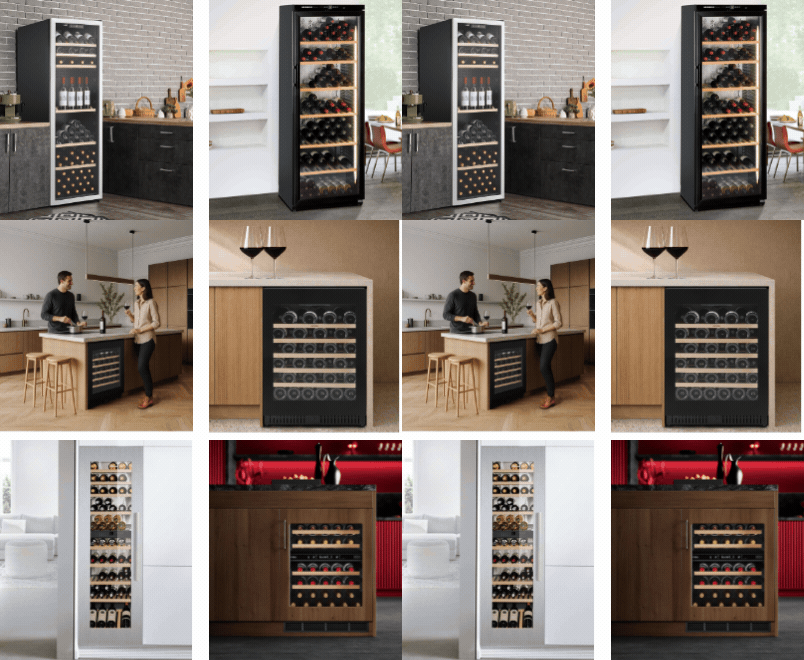
A selection of freestanding, built-under and integrated wine fridges
Can I build it into my kitchen cabinetry or under a bench?
A built-in wine fridge looks sleek, but ventilation is a critical factor that many people overlook until delivery day. Remember: fridges don't make heat disappear. They extract it from the inside and push it out. If that hot air can't escape, the temperature around the fridge climbs, the motor works harder, and it’s more prone to having problems.
For this reason, you need to order a specific type of wine fridge if you plan to place it within a cabinetry recess.
Even if you plan to get a freestanding model, Colin advises taking care with how you position it: “A freestanding fridge still needs air space on all sides, so don’t push it into a corner hard up against a wall.”
Freestanding fridges vent from the back and sides, so they generally need around 25 to 50mm of clearance to dissipate heat. Squeezing one into a tight cavity can lead to overheating and failure.
Built-in and under-bench fridges have front-venting exhausts at the base, so they can sit flush within cabinetry recesses. Integrated wine fridges are a premium option in this category, and can be fitted with a custom front panel made to match your surrounding cabinetry, if that suits your design preference.
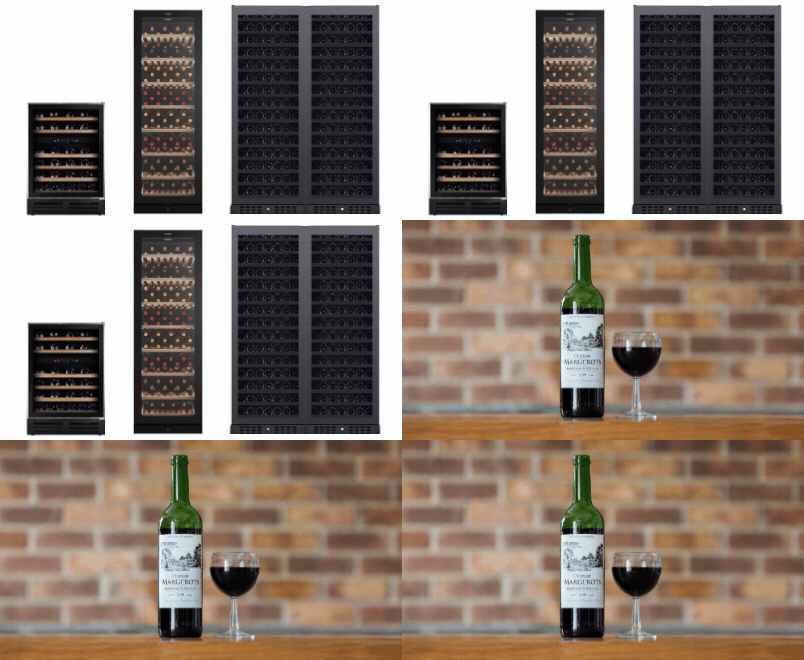
Wine fridge capacities are based on classic narrow Bordeaux wine bottles
How many bottles does it actually hold?
You don’t want to start stocking your new wine fridge and find your collection doesn't fit. Bottle capacity is almost always measured using the standard 750ml Bordeaux bottle, which has a straight, slim profile. Because wine collections come in all sorts of bottle shapes, the advertised number is usually a best-case scenario rather than a practical reality.
Pinot noir and sparkling wine, for example, have wider, sloped-shoulder bottles that can significantly reduce the fridge's capacity. Look for adjustable or sliding shelves, including wooden shelves, that can fit larger diameters without scraping and damaging the bottles’ labels. It also pays to think ahead. If you’re a collector, and you have room, you may want to buy a fridge with enough storage space not only for your current wine collection, but also for future purchases.
Colin again: “Don’t go bigger than you need for the sake of it, because why pay to cool empty space? If you’ll use the fridge mostly for entertaining, around a 50-bottle capacity is usually plenty. If you plan to grow your collection and store wine longer-term, though, consider a larger model that can handle what you intend to collect.”
Will it cope with Australian summers?
Cooling hardware matters, especially if the fridge will live in a room without constant air conditioning, like a garage or a sunlit dining room. Before you buy, check the ‘guts’ of the fridge as well as what kind of glass is on the door.
Thermoelectric fridges are quiet, but they tend to struggle when the room gets hot. Compressor models are the standard choice in Australia because they cope much better with high temperatures, though it's worth checking the ambient temperature range listed for your model and its energy efficiency rating, since it will work harder in summer.
If the fridge is in a bright room, UV light can degrade wine over time. Look for UV protection via tinted, double or triple-glazed glass. Low-E (low emissivity) coatings can also help reduce heat gain. Soft, low-heat LED lighting is another handy feature, as it lets you show off your bottles without warming the cabinet.
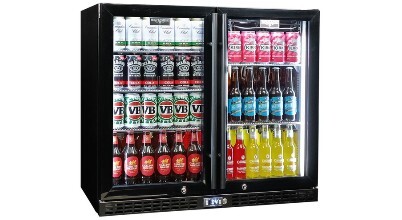
Can I just use a regular bar fridge?
It might be tempting to opt for a bar fridge that can also hold cans and beer bottles, but they are built for a different job. They're designed to cool quickly and sit at around 2 to 5°C, which is too cold for wine and can mute its complex flavours. Standard compressors can also create small vibrations that may disturb sediment in wine. Wine fridges create the gentler conditions needed for long-term storage and wine preservation.
Temperature (12 to 14°C): This range suits all wines destined for ageing, including red and white wines and Champagne. Temperature fluctuations make wine expand and contract slightly, which can push the cork out or draw in oxygen and affect quality over time, so holding a steady temperature matters as much as the number itself. Wine fridges are built to maintain a stable temperature, whereas a bar fridge is set much colder and can fluctuate more as its compressor cycles on and off.
Humidity (55 to 70%): Good humidity control keeps natural corks supple and expanded, maintaining an airtight seal. If humidity levels drop below 50%, corks can dry out and shrink. Above 75%, the wine itself should stay safe, but mould can grow and damage paper labels.
For bottles sealed with screw caps or glass stoppers, humidity matters far less, but the same temperature range rule applies.
As Colin says, "It’s the constant change in temperature that can damage wine, and as we all know, this can be an issue in Australia. The consistent temperature and humidity in wine fridges remove this risk."

Buying a wine fridge as a gift?
A wine fridge can be a brilliant gift for the wine lover in your life, but it takes a bit of detective work before you buy. You'll need to know their drinking preferences and home layout to get it right. For a casual entertainer who serves a mix of crisp whites and ambient reds, a dual zone wine cabinet is a great fit. If they're a keen collector who cellars vintage reds for years, a single zone model could be a better choice.
It's best to avoid large built-in models unless you're actively involved in renovating their kitchen and they ‘re choosing their preferred wine fridge. Built-in units need precise cabinetry work and ventilation planning, which can turn a fun gift into a stressful chore. Smaller freestanding wine fridges are easier to gift because they can sit in a games room, home office or next to a dining room dresser without any major installation fuss.
Taking the time to measure your space, assess your bottles and think about how you like to drink will save you a lot of guesswork, whether you're buying for yourself or someone else.
Get a wine fridge FAST with Free, Next Day Delivery*
Appliances Online has a huge selection of freestanding, built-in and integrated wine fridges from leading brands like Vintec and LeCavist as well as budget-friendly models from Hisense, Cantina and Haier. And with our legendary FREE delivery we can usually get orders to 95% of Australians by the next day (Mon-Fri) if it's in stock. Last-minute gift? Sorted. We even offer a paid Same Day Delivery option in NSW, QLD and VIC metro areas if you order before 12pm on weekdays.
Plus, we’ll save you from an unsightly nature strip by taking your old fridge away, if you have one, for safe and free recycling. Check out our full range of wine fridges here, and if you have any questions about finding the best model for your home, call our friendly team 24/7 on 1300 000 500, or message us via the chat icon at the bottom of your screen.

Oli is Appliances Online's editor and blogger, with almost two decades of lifestyle-related writing and editing to his name. With a mission to help you buy better and live smarter, his brand loyalty will forever belong to the appliance manufacturer that develops a self-emptying dishwasher.
Latest Articles

LAUNDRY
22 OCTOBER 2026
Free up laundry space with these stackable washers and dryers
Need more laundry space? The only way is up!

TV, AUDIO & ELECTRONICS
14 OCTOBER 2026
How to shop smarter this Black Friday
Black Friday tips to avoid FOMO and buyer’s remorse.

TV, AUDIO & ELECTRONICS
14 OCTOBER 2026
How to get the best Black Friday TV deal in 2026
Get the right TV for your home at the right price.
HOME LIVING+
8 OCTOBER 2026
10 of our best selling indoor bar fridges in Australia 2026
Find the perfect compact drinks fridge for your home
More Like This
LAUNDRY
22 OCTOBER 2026
Free up laundry space with these stackable washers and dryers
Need more laundry space? The only way is up!
TV, AUDIO & ELECTRONICS
14 OCTOBER 2026
How to shop smarter this Black Friday
Black Friday tips to avoid FOMO and buyer’s remorse.
TV, AUDIO & ELECTRONICS
14 OCTOBER 2026
How to get the best Black Friday TV deal in 2026
Get the right TV for your home at the right price.