key Specifications
Brand
DCW Editions
Model Number
303BL
Height (mm)
630 mm
Width (mm)
390 mm
Depth (mm)
210 mm
Weight (kg)
1.8 kg
Finish Colour
Black
Material
Steel




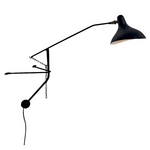
Have you got an old appliance that's giving up, or are you looking for something more modern? Perhaps you're looking for a model that is more energy efficient or home essentials that are suitable for your growing family's needs. Appliances Online is here for you. Featuring an extensive selection you can select from, we're the go-to retailer in Australia for appliances and other home essentials. Making the chore of shopping a hassle-free and easy endeavour, we're committed to helping our customers get just what they need. With us being Australia's biggest online retailer of appliances and other home essentials, we provide you with a range of over 8,000 products from some of the best brands around the globe. More than just selling premium products, we seek to make the process of shopping for home essentials delightful and memorable, revolutionising the way you consider purchases for your home. With us, the days of tirelessly searching for products like DCW Editions Gras 303 Wall Lamp - Black 303BL are over. More than just selling premium products, we seek to make the process of shopping for home essentials delightful and memorable, revolutionising the way you consider purchases for your home.
We strive to make purchasing home appliances and other home essentials simple and hassle-free since they're essential to your day-to-day. We know that you're looking for certain items, and you might need them right away; because of that, we've fine-tuned our services to make shopping with us straightforward. Our Free Next Day Delivery can reach 95% of all Australians, and in most cases, we can ensure that in-stock orders will be at your doorstep the next day, from Monday to Friday. This means that even products like Ay Illuminate Nama 2 Pendant Light - Black 412-100-2 and CTO Lighting Trevi 3 Pendant Light - Bronze TREPEOBZMO could be with you sooner. What's more, we handle Free Connection for major appliances in the many different areas we go to, and we even take away your old appliances for recycling at no extra charge – just make sure to click on this option when checking out! Our goal is to make sure it is as easy as possible for you to upgrade or purchase any brand new appliances, like Bosch Series 8 Accentline Built-In Compact Oven with Microwave Function Black CMG978NB1A or Rogerseller Round Floor Waste - Matte Black 3806001111, and get them ASAP.
Regardless of whether it's your first time moving into an apartment or you've been a homeowner for years, purchasing appliances and other home essentials that match your budget and needs is difficult. This is the reason we have our legendary service in action; we aim to provide you with comprehensive advice, assistance, and information necessary for making a suitable choice. Available 24/7 and all year long, our Sydney-based customer service team is here for you, and for any product enquiries, feel free to dial 1300 000 500 to talk to someone now. If you need to check if we deliver to you, it's as easy as entering your postcode in the location box at the top of this page. Thanks to our Price Match Guarantee, not only can you get stellar service but a great price as well; just inform us about the price match details, and we'll assist you in getting the deal you want. At Appliances Online, we're dedicated to ensuring you're completely satisfied with your purchase, ensuring that no matter what you buy from our Lighting collection, we deliver satisfaction right to your door with our Legendary Delivery Service! Even if you're exploring products from our Heating & Cooling page or those from the BBQs & Outdoor Living collection, you can get them sooner with Appliances Online.